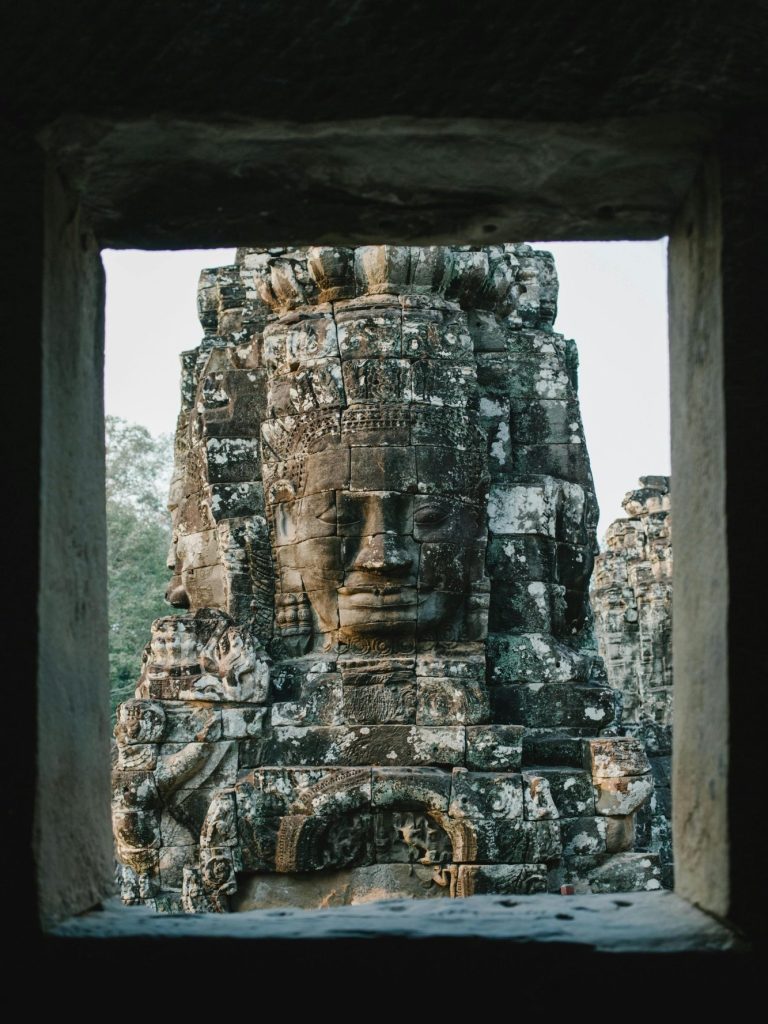
Cambodia: A long and interesting history
Cambodia's history is rich and interesting. Influenced by its position in the Indochina region, it has been a Kingdom and an Empire with evidence still in existence of its impressive architecture. Its culture flourished under the Khmer Empire (802-1431) but later Cambodia's power declined and it became a French protectorate until its independence in 1953.
Photo by Julia Volk
The Killing Fields
What became known as the Killing Fields were the areas of farmland across the Democratic Republic of Kampuchea (Cambodia) where around 1 million people were exterminated by the Khmer Rouge (ruling Communist Party) and buried in mass graves. Most were killed by a blow to the back of the head from an iron bar or agricultural tool such as a hoe. Some were buried alive.
Scarves
An item of cultural dress or a death warrant?
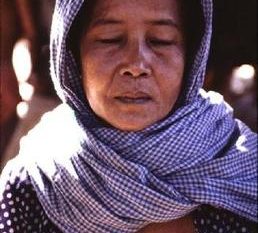
The 'Krama' is a traditional scarf worn by the people of Cambodia. During the genocide the colour of scarf you wore determined your fate. The red and white Krama represented the Khmer Rouge and those loyal citizens. However, after the revolt against the Khmer Rouge in the Eastern region of Cambodia, those captured and 'evacuated' were made to wear a blue and white krama. 'If you were wearing a blue scarf, they would kill you' (Huy Rady, eye-witness).
Tuol Sleng
Interrogation Centre to Genocide Museum
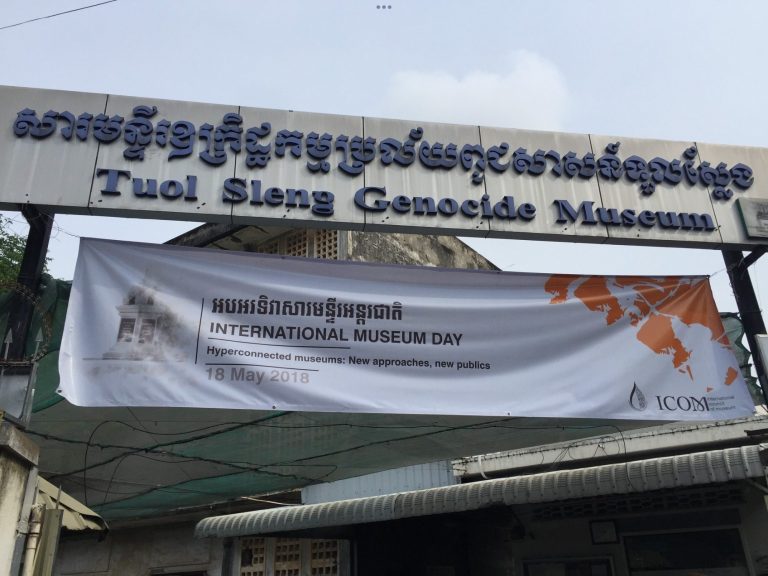
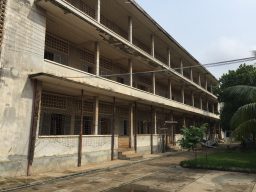
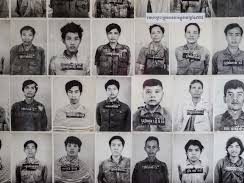
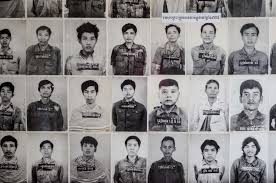
Tuol Sleng Genocide Museum is situated in the former Security Office 21 (S-21) in Phnom Penh. As the central hub for the prison network across Cambodia, S-21 was the site of detention, interrogation, torture and extermination. It is now a site of memory, educating visitors on the mass atrocities committed in Cambodia during the genocide.